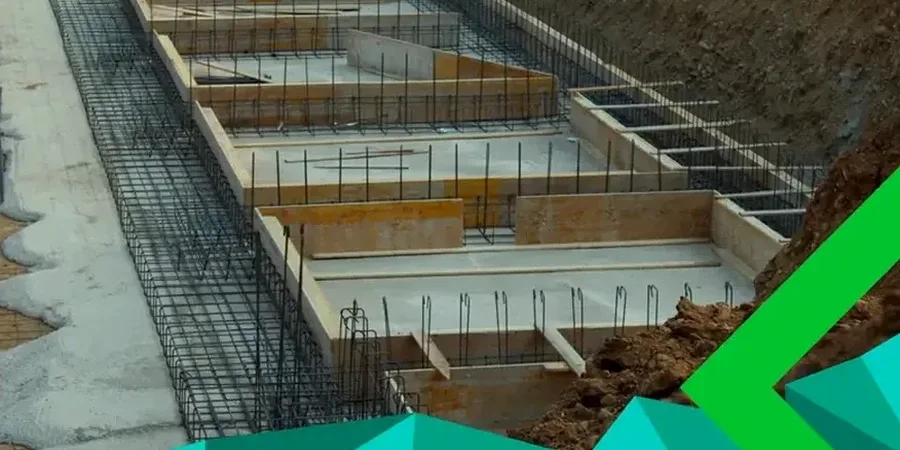
In Barrie, the contrast between the sandy uplands of the Ardagh Bluffs and the soft, compressible clays near Kempenfelt Bay creates a set of geotechnical conditions that demand a careful approach to shallow foundation design. We often encounter sites where the upper crust of weathered till masks a deeper layer of glaciolacustrine silt, which can lose strength dramatically when saturated. Before placing a footing, the team runs a program that combines field investigation with laboratory testing to define the allowable bearing pressure and the expected settlement under service loads. Because Barrie sits in a region with a frost penetration depth reaching roughly 1.5 meters, the interaction between the footing elevation and the seasonal water table becomes a critical design parameter. A proper grain-size analysis of the bearing stratum helps us anticipate drainage behavior and frost susceptibility, which directly influences the long-term performance of the foundation.
In the Kempenfelt Bay basin, the difference between a successful shallow foundation and a costly repair often lies in a single consolidation test that reveals the true compressibility of the varved clay.
Process overview
Local context
The NBCC Part 4 requires that every shallow foundation design in Canada address the ultimate limit state of bearing capacity and the serviceability limit state of settlement, but in Barrie the risk is amplified by the presence of the Northern Shale Bedrock at variable depths across the city. Where the rock surface dips abruptly beneath a pocket of soft sediment, a footing can experience a sharp gradient in stiffness that induces angular distortion well beyond the permissible 1/500 for conventional buildings. We map these transitions using a combination of seismic refraction and dynamic cone penetration, then adjust the footing geometry or introduce a structural slab to bridge the softer zone. Another hazard that demands attention is the potential for softening of the bearing stratum during construction, particularly when excavations are left open in the spring melt period. A sudden rain event can turn a stiff clay into a workability nightmare and reduce the undrained shear strength by half, which is why we specify a mud slab or a short construction window as part of the foundation recommendations.
Relevant standards
NBCC 2015 Part 4 – Structural Design (foundations), CSA A23.3:2014 – Design of concrete structures (footing reinforcement), ASTM D2488 – Visual-manual description of soils (test pit logging)
Additional services
Bearing Capacity Analysis
Calculation of allowable bearing pressure using Vesic and Meyerhof methods, calibrated with SPT N-values and undrained shear strength from field vane or triaxial tests.
Settlement Evaluation
Immediate and consolidation settlement prediction using oedometer data and elastic half-space models, with a focus on the compressible glaciolacustrine silts common in south-end Barrie.
Frost Protection Design
Determination of the required footing depth below the frost line, considering the soil's thermal conductivity and the groundwater regime per Barrie's local climate data.
Subgrade Reaction Modulus
Derivation of k_s values for mat and raft foundations through plate load correlation or back-analysis from constrained modulus, essential for structural engineers modeling soil-structure interaction.
Typical parameters
Top questions
What is the typical cost for a shallow foundation design package for a single-family home in Barrie?
For a residential project in Barrie, a complete shallow foundation design package—including site investigation, laboratory testing, and the engineering report with bearing capacity and settlement calculations—generally ranges from CA$2,780 to CA$4,580, depending on the number of test pits and the complexity of the soil profile.
How do you determine the frost depth for a footing in the Barrie area?
We use the frost penetration models referenced in the NBCC, which for Barrie indicate a design depth of approximately 1.5 meters. However, the actual required embedment can vary if the soil has high thermal conductivity or if the groundwater table is shallow, so we validate the depth with local climate station data and the soil's moisture content at the time of investigation.
Can a shallow foundation be used on the soft clay soils near the Barrie waterfront?
In many cases, yes, but it requires a detailed consolidation analysis because the varved clays near Kempenfelt Bay can undergo significant long-term settlement. We often recommend a wider, reinforced strip footing or a stiffened raft to distribute the load and keep the differential settlement within the limits of CSA A23.3, though for very soft deposits a deep foundation alternative may be more economical.