In the City of Barrie, where the Kempenfelt Bay shoreline meets the rolling hills of the Oro Moraine, managing natural and engineered slopes is a critical component of safe, long-term development. The category of Slopes encompasses the assessment, design, and stabilization of inclined ground surfaces—whether they are naturally occurring landforms, cuts created for roadways, or embankments supporting residential subdivisions. With Barrie’s continued growth pushing construction onto more challenging terrain, understanding slope behavior is no longer optional; it is a fundamental requirement for protecting property, infrastructure, and public safety. A comprehensive slope stability analysis forms the backbone of any project, identifying potential failure modes before they become costly or dangerous liabilities.
Barrie’s geological setting presents a unique set of conditions that directly influence slope performance. The area is underlain by a complex sequence of glacial deposits, including dense till, glaciolacustrine silts and clays, and sandy outwash, all draped over Paleozoic bedrock. The legacy of glacial Lake Algonquin has left behind sensitive, often stratified soils that are prone to softening and strength loss when saturated. Steep ravine systems, particularly those feeding into Kempenfelt Bay and the Simcoe Lowlands, frequently exhibit signs of historic instability. Add to this the seasonal extremes of Southern Ontario—heavy spring snowmelt, intense summer storms, and deep frost penetration—and you have an environment where pore water pressure management and erosion control become paramount considerations in any geotechnical evaluation.
Regulatory compliance in Barrie is governed by a hierarchy of standards, most notably the Ontario Building Code (OBC), which references the National Building Code of Canada and mandates geotechnical investigations for construction near slopes. Crucially, the local conservation authority—the Lake Simcoe Region Conservation Authority (LSRCA)—enforces strict regulations under the Conservation Authorities Act, specifically Ontario Regulation 179/06 (Development, Interference with Wetlands and Alterations to Shorelines and Watercourses). This regulation controls development within defined regulated areas, which often encompass valleylands, shorelines, and hazardous slopes. Any work within these zones requires a permit and must demonstrate that the proposed activity will not aggravate existing instability or create new hazards. The City of Barrie’s own Official Plan and zoning by-laws further reinforce these requirements, often mandating geotechnical assessments and slope stability reports as conditions of site plan approval or building permit issuance.
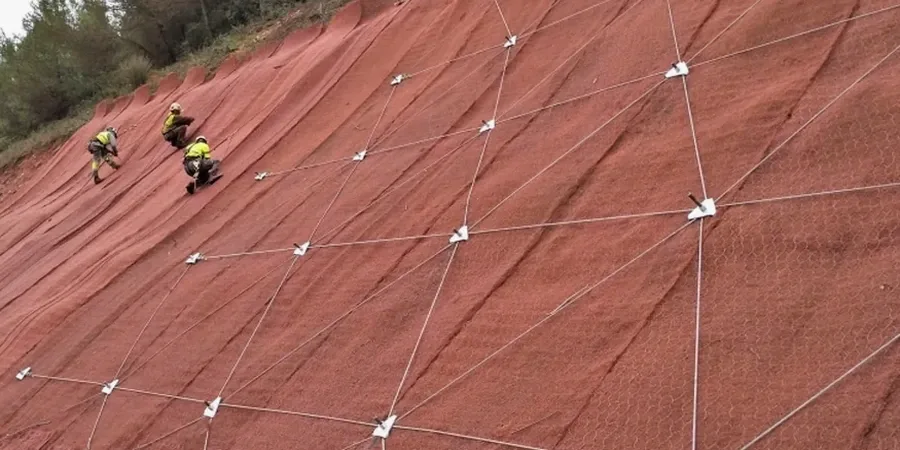
The types of projects that demand a thorough understanding of slope mechanics are diverse and widespread across Barrie. Residential developments on the city’s south end, where new subdivisions abut existing wooded ravines, require detailed setback analyses to ensure homes remain safe from long-term erosion and rotational failures. Infrastructure projects, such as the widening of arterial roads like Essa Road or Mapleview Drive, often necessitate deep cuts that must be stabilized using engineered solutions. For these scenarios, an active/passive anchor design may be employed to reinforce the cut face by transferring tensile loads deep into competent soil or rock. Similarly, commercial developments on sloping sites frequently rely on robust retaining wall design to create usable level platforms while resisting the immense lateral earth pressures exerted by the retained ground. Whether it is a waterfront revitalization project along the North Shore Trail or a simple infill lot on a modest incline, each project demands a site-specific approach rooted in sound geotechnical principles. Ultimately, proactive slope management in Barrie is an investment in resilience, ensuring that the city’s built environment can coexist safely with its dynamic natural landscape for decades to come.
Common questions
What triggers a mandatory slope stability assessment in Barrie?
A mandatory slope stability assessment is typically triggered when proposed development falls within a regulated area administered by the Lake Simcoe Region Conservation Authority, such as valleylands, shorelines, or lands adjacent to steep ravines. Additionally, the City of Barrie’s site plan review process will require a geotechnical report if construction is proposed near the top or toe of any slope steeper than 3 horizontal to 1 vertical, or where evidence of historic instability exists.
How does the local geology affect slope stability in the Barrie area?
Barrie’s glacial geology creates layered soil conditions where permeable sands can overlie impermeable silts and clays, leading to perched groundwater tables that reduce effective stress and weaken the soil. The glaciolacustrine deposits are particularly sensitive to disturbance and can lose significant strength when wet, making them prone to progressive failure during heavy rain or rapid snowmelt events common in Southern Ontario.
What is the difference between active and passive anchoring for slope reinforcement?
Active anchors are post-tensioned during installation to immediately apply a compressive force to the slope face, actively locking the unstable block against more competent ground. Passive anchors, by contrast, are not tensioned and only develop resistance as the ground begins to move and deform against the anchor element. The choice between the two systems depends on the allowable deformation, the failure mechanism identified, and the sensitivity of nearby structures to movement.
Do retaining walls for slopes require a building permit in Barrie?
Yes, retaining walls over a certain height, typically 1 meter, generally require a building permit from the City of Barrie. Furthermore, if the wall is located within a conservation-regulated area, a separate permit from the Lake Simcoe Region Conservation Authority is also mandatory. The design must be sealed by a professional engineer licensed in Ontario and demonstrate adequate drainage and structural capacity for the specific site conditions.