Barrie sits at an elevation of roughly 252 meters above the level of Georgian Bay, but the real challenge for any underground project begins just a few meters below the surface. The city overlies a complex sequence of glaciolacustrine deposits, primarily the soft to firm silty clays of the former proglacial Lake Algonquin. When you propose a tunnel through these materials, you are not simply digging a hole; you are managing a deformable, often saturated, geological unit that reacts to even minor pressure changes. We have spent years characterizing these specific Barrie soils, and the difference between a tunnel that advances smoothly and one that faces constant face instability and surface settlement comes down to the precision of the pre-construction geotechnical model. Our analysis directly targets the stress-strain behavior and consolidation characteristics that define these local deposits, allowing contractors to select the right TBM parameters or sequential excavation methods long before mobilization. For deeper alignments, integrating our findings with a CPT test campaign provides the continuous stratigraphic profile needed to map these soft clay lenses with the resolution a TBM operator requires.
In Barrie's glaciolacustrine clays, face stability is not about strength alone; it is a race between the rate of excavation and the rate of pore pressure dissipation.
Process overview
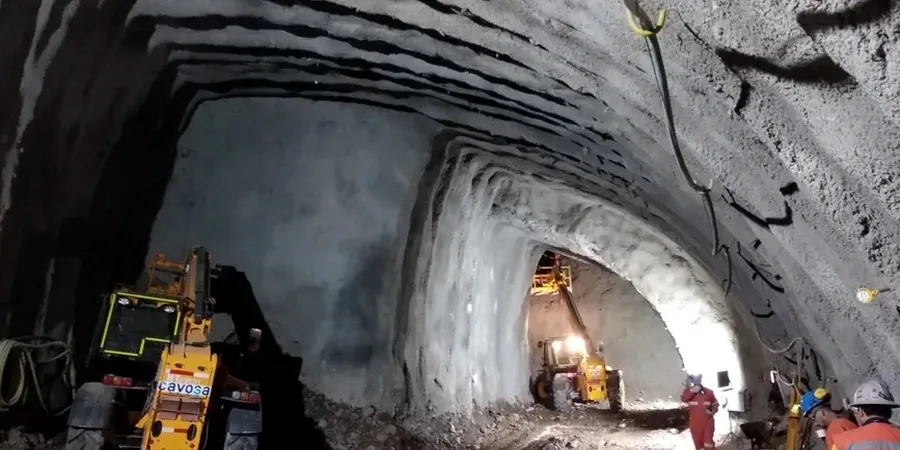
Local context
The glaciolacustrine clays across Barrie’s Kempenfelt Bay lowlands can exhibit undrained shear strengths below 40 kPa at shallow depths, which is a recipe for rapid face loss if the tunnel heading is not properly supported. We have observed that the groundwater table in these deposits often sits within 2 to 3 meters of the surface, and the resulting pore pressures dramatically reduce the effective stress around the excavation periphery. The immediate risk is a wedge failure at the face, but the long-term concern is the consolidation settlement that propagates upward through the clay and can damage infrastructure on Kempenfelt Drive or along the waterfront. We quantify these risks through advanced triaxial testing under stress paths that replicate the actual excavation sequence, giving you a realistic prediction of surface trough width and depth. Without this level of site-specific numerical modeling, you are gambling that a generalized geological report will match the ground behavior, and in a city like Barrie where the soft clay thickness can vary from 10 to over 30 meters across a single project site, that is a risk that can shut a job down for months.
Relevant standards
ASTM D4767 (Consolidated Undrained Triaxial on Cohesive Soils), CSA + ASTM D2435/D4186 (One-Dimensional Consolidation Properties), NBCC 2020 (Seismic Site Classification for Tunnel Design), FHWA-NHI-10-034 (Technical Manual for Design and Construction of Road Tunnels), CSA Z246.1 (Security of petroleum and gas pipeline systems, referenced for methane risk)
Additional services
Tunnel Face Stability and Settlement Analysis
We perform 2D and 3D finite element modeling calibrated with your specific Barrie site data, including advanced constitutive models like Hardening Soil or Soft Soil Creep, to predict face extrusion, surface settlement troughs, and the influence zone on nearby structures.
Pre-Excavation Ground Conditioning Assessment
Using laboratory testing on undisturbed Shelby tube samples of the local clay, we evaluate the response to EPB foam conditioning or slurry shield parameters, including Atterberg limits, grain size distribution, and dispersivity testing to optimize TBM operations and muck handling.
Typical parameters
Top questions
What is the typical cost range for a geotechnical analysis for a soft-soil tunnel project in Barrie?
The fee for a comprehensive soft-soil tunnel analysis in Barrie typically ranges from CA$5,040 to CA$22,560, depending on the number of boreholes, the depth of the proposed alignment, and the complexity of the required laboratory testing program. A straightforward investigation for a short microtunnel will be at the lower end, while a full-scale TBM alignment requiring detailed seismic and consolidation analysis along kilometers of alignment will be at the upper end.
How do you account for the risk of methane gas in the Barrie sediments during tunneling?
We incorporate a gas monitoring protocol into the subsurface investigation, installing piezometers with gas sampling ports in the organic-rich silty clay layers. The samples are analyzed for methane concentration and pressure, and the results feed directly into the project's hazard assessment to determine the required tunnel atmosphere classification and ventilation rates.
What laboratory tests are essential for analyzing the soft glaciolacustrine clays for a tunnel?
A focused suite includes CIU triaxial tests with pore pressure measurement to define the undrained strength profile, incremental oedometer consolidation tests to capture the compressibility and stress history, and permeability tests under different effective stresses. We also run Atterberg limits and grain size analyses on every sample to correlate with the CPTu data.
How does the high groundwater table in Barrie affect the tunnel analysis?
The groundwater at 2-3 meters depth means that even shallow tunnels are well below the phreatic surface, creating a significant hydraulic head. Our analysis quantifies the seepage forces acting on the face and the long-term buoyancy effects on the final lining. We design the pore pressure parameters for your TBM to ensure the face pressure is always above the in-situ water pressure plus a safety margin.
Can you predict the extent of surface settlement above a tunnel in Barrie's soft clay?
Yes. We use empirical methods based on the volume loss parameter, calibrated with local case histories, and refined with numerical models. The analysis produces a settlement trough curve showing the maximum settlement at the centerline and the width of the influence zone, which is critical for assessing potential damage to buildings and utilities along the alignment.