In-situ testing forms the backbone of geotechnical engineering in Barrie, providing direct, real-time data about subsurface conditions without the disturbance associated with sampling and lab work. This category encompasses a range of field tests performed on soil, rock, and fill materials at their natural location, ensuring that the engineering properties measured truly represent the ground's behaviour. In a city experiencing rapid residential and commercial growth, from the subdivisions of south Barrie to the infill projects downtown, these tests are critical for foundation design, slope stability analysis, and ensuring long-term structural integrity. By evaluating parameters like density, strength, and permeability directly in the field, engineers can make immediate, informed decisions that keep projects on schedule and within budget.
Barrie's unique geological setting makes rigorous in-situ testing particularly important. The city sits at the western edge of the Lake Simcoe basin, underlain by a complex sequence of glacial deposits from the Simcoe Lobe of the Laurentide Ice Sheet. Much of the area features thick layers of clayey silt till, interspersed with sand and gravel lenses from glacial outwash and glaciofluvial deposits. The legendary Oro Moraine, just east of the city, feeds permeable sand and gravel aquifers that can present groundwater challenges during excavation. In the older parts of the city and along Kempenfelt Bay, soft, compressible organic soils and post-glacial lake sediments are common, requiring careful assessment of settlement potential and bearing capacity that only field testing can reliably provide.
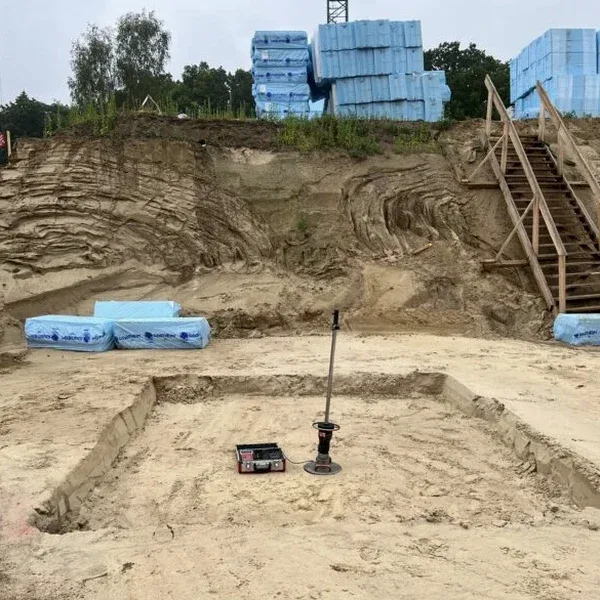
All in-situ testing in Barrie is governed by the Ontario Building Code (OBC 2012, as amended), which mandates geotechnical investigations for most structures. The code references the Canadian Foundation Engineering Manual (CFEM) and CSA standards as best-practice guidelines. For example, the field density test (sand cone method) must comply with ASTM D1556 or the equivalent CSA A23.2-10A standard to verify compaction levels in engineered fills. These standards ensure that the testing methodology, equipment calibration, and data interpretation meet a consistent benchmark, providing the legal and technical framework that protects public safety and investment. Municipal requirements from the City of Barrie often stipulate minimum testing frequencies for subdivisions and site plans, making compliance a key part of the development approvals process.
Virtually every type of construction project in Barrie relies on in-situ testing. Residential subdivisions on greenfield sites require extensive compaction testing to certify building pads and road subgrades. Commercial and industrial developments, such as the large-format retail stores in the Mapleview corridor, depend on full-scale field bearing capacity tests and vane shear tests to design shallow foundations over variable till. Infrastructure projects, including the Harvie Road bridge and ongoing expansions to the Barrie Transit system, use in-situ pressuremeter and cone penetration tests to characterize deep soil layers for deep foundation design. Even smaller projects like residential additions or retaining walls near the lake benefit from a targeted field investigation to mitigate risks associated with groundwater and soft soils.
Available services
Common questions
What is the difference between in-situ testing and laboratory testing of soils?
In-situ testing measures soil properties in their natural, undisturbed state at the actual location, preserving factors like stress, moisture, and structure. Laboratory tests are performed on samples extracted from the ground, which can be disturbed during sampling and transport. Field tests often provide a more representative picture of mass behaviour and are essential for materials like sensitive clays or granular soils that are difficult to sample intact.
Which in-situ tests are most common for residential construction in Barrie?
For typical residential projects in Barrie, the most common in-situ tests include standard penetration testing (SPT) for soil stratigraphy, field density tests using the sand cone or nuclear gauge to verify engineered fill compaction, and vane shear tests in soft clays near the lake. These tests provide critical data for foundation bearing capacity, settlement analysis, and ensuring that building pads meet Ontario Building Code requirements for compaction.
Are in-situ tests required by Ontario regulations before building?
Yes, the Ontario Building Code requires a geotechnical investigation, which heavily relies on in-situ testing, for the design and construction of most buildings. The City of Barrie's site plan and subdivision approval processes mandate specific field testing programs to verify soil conditions, groundwater levels, and fill compaction. These requirements ensure structures are founded safely and that municipal infrastructure is built over competent, properly prepared ground.
How do Barrie's soil conditions affect the choice of in-situ testing methods?
Barrie's variable glacial deposits, from dense till to soft lake-bottom clays, demand a flexible testing program. For the dense, silty till common in many areas, SPT and cone penetration tests are effective. However, in the soft, sensitive clays and organic soils found near Kempenfelt Bay, more specialized tests like field vane shear or pressuremeter tests are often necessary to accurately measure low shear strengths and deformation characteristics without disturbing the sensitive soil fabric.